
-
Our Services
- AI with HKPC PICASSO
- The Cradle – Go Global Service Centre
- New Industrialisation
-
Smart Manufacturing
- Smart Manufacturing
- IIOT
-
AI & Robotics
- AI & Robotics
- Unmanned Logistics Center Technology
- Applying Embodied Intelligence to Industrial Operations
- AI Sheet Metal Surface Defect Detection Technology
- Product Innovation and Design Management
- Smart Manufacturing/ New Industrialisation Assessment and Implementation
- Application and Research on Vision and Ultrasonic Inspection Assisted by Artificial Intelligence and Robotics
- Development and Implementation of Intelligent Production Lines
- Autonomous Air-ground Cooperative Tunnel Inspector
- AR-Empowered Robot Control System (ARERC System)
- IoT-enabled Smart Toilet Bowl Cleaning System
- Novel Materials
-
Advanced Manufacturing Technology
- Advanced Manufacturing Technology
- 3D Scanning and Reverse Engineering Service
- Flexible Metallic Fiber Physical Porous Part Fabrication Technology
- Dual Laser Metal Polishing Technology
- Advanced Additive Manufacturing, 3D Printing Technology, and Direct Manufacturing
- Electrically-Assisted Free Forming (EAFF) Technology for Customisation of Sheet Metal Parts
- Plastic Process and Machinery Technology
- Fashion and Garment Technology
- Watch Assembly Automation Technology
-
HealthTech and Traditional Chinese Medicine
- HealthTech and Traditional Chinese Medicine
- R&D service and Functional Investigation on Chinese Medicine, Health Food & Wellness product
- Compliance Consultation Service for Chinese Medicine, Pharmaceutical, Health Food and Medical Device Industries
- Manufacturing Enhancement - Automatic Intelligent System for Production and Packaging in Chinese Medicine, Pharmaceutical and Health Food Industries
- Assisting funding application for local medicine and health industrial associations
- “The Cradle” Services for Health Tech and TCM Industry
-
Digital Transformation
- Digital Transformation
- HKPC Digital DIY Portal
- Digital Transformation Support
- Intelligent Integrated Non-wearable and Wearable Health Monitoring System and App for Elderly Homes
- Smart Solution
- Research and Analytics
- Embedded Software System
- DevOps Maturity Assessment and Consultancy Service
- Software Testing Automation Consultancy Service
- Blockchain Consulting Service
- Extended Reality (XR) technology and consultancy service
-
Cyber Security
- Cyber Security
- Cyber Security
- Cybers Security-by-design, Privacy and Compliance-by-default
- Design & Architecture
- Train & Develop
- Offensive Security
- Intelligent Security
- Defensive Security
- Intelligent Hardening
- Internet of Things (IoT) & Operational Technology (OT) Cyber Security Testing
- Phishing Defence Services
- Cyber Security Assessment & Audit
- Cyber Security Consultancy for i4.0 & e4.0
-
Green & Smart Living
- Green & Smart Living
- Green Technology
- Food Technology
- Smart Living
-
Corporate Sustainability
- Corporate Sustainability
- ESG and Sustainability Services
- Manufacturing Technology (Tooling, Metals & Plastics) Recognition of Prior Learning (RPL) Mechanism
- Market Research and Analytics
- Business Innovation
- Sustainability-related Standards and Guidance
- Organisation Innovation Capability Development
- District Innovation
- Customer Service Assessment
- Intellectual Property (IP) Protection and Management
- Support to Creative Industries
- Manufacturing Standards Consultancy Service
- Production Capacity Optimisation
- Cost of Quality
- HKPC Academy
- SME Support
- Funding
- Testing & Standards
- Venues & Facilities
-
Support & Resource
- Technology Transfer
-
Support Centres
- Support Centres
- Embodied AI International Applications Hub
- Hong Kong Industrial Technology Centre for Marine Economy
- Deep Tech Innovation Hub
- Circularity Research Centre
- Future Life and Health Tech Centre & Future FoodTech Lab
- Hong Kong Industrial Artificial Intelligence Robotics Centre (FLAIR)
- Intellectual Property Services Centre
- The Cradle – Go Global Service Centre
- Agentic AI and Industrial Metaverse Hall
- HKPC-HP 3D Printing Technology Centre
- Future Manufacturing Hall
- Hong Kong Technology and Innovation Support Centre
- Inno Space
- The HATCH
- Advanced Electronics Processing Technology Centre
- Green Living Laboratory
- Reliability Testing Centre
- Electromagnetic Compatibility Centre
- Plastics Technology Centre
- Smart Wearables, Watch & Clock Technology Centre
- Hong Kong Digital Testing Hub
- Hong Kong Industrial Drone Technology Centre
- Aqua Research Laboratory
- Advanced Materials and Intelligent Manufacturing Centre
- Hong Kong Joint Research Lab for Applications of Intelligent Automation Technology
- Testing & Standards
- HKPC Spotlights
- About US
-
 LANGUAGE
Protect Your Personal Data: HKCERT Alerts Shoppers to Holiday Phishing Risks

(Hong Kong, 19 December 2025) As the Christmas shopping season approaches, the Hong Kong Computer Emergency Response Team Coordination Centre (HKCERT) urges the public to stay vigilant when shopping online, protect personal data, and avoid entering sensitive information on insecure websites to prevent identity theft and online fraud. Recent scams have become increasingly diverse, including counterfeit e-commerce platforms, phishing emails, and social media discount traps, which can lead to financial losses or data leaks if consumers are not cautious.
Highly Convincing Fake Shopping Platforms and Phishing Sites
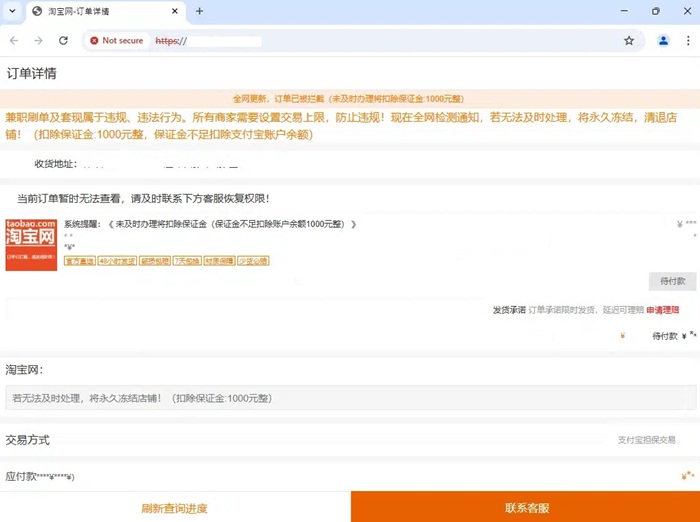
HKCERT has observed that cybercriminals often set up highly convincing fake online shopping platforms during festive peaks. These fraudulent sites trick users into entering login credentials, credit card details, and delivery addresses. Their design, domain names, and logos closely mimic legitimate platforms, making it difficult for consumers to distinguish between real and fake sites.
Festive Discount Traps via Social Media and Messaging Apps
In addition to fake websites, scammers may use social media advertisements, instant messaging app links, or emails claiming to offer limited-time Christmas discounts or free shipping. These often redirect victims to phishing sites. Some scams even use fake QR codes or forged payment pages to capture sensitive information without the victim’s awareness.
Telephone Scams Impersonating E-commerce Platform Staff
In these scams, fraudsters claim to be HKTVmall staff and allege that victims were automatically enrolled in additional services during account registration. Victims are then directed to contact so called customer service representatives via messaging apps or to visit designated websites to “cancel” the service. These interactions are used to harvest personal data and banking information through social engineering and phishing techniques. HKCERT reminds public to remain cautious of unsolicited calls related to online shopping accounts, avoid following instructions to visit external websites or messaging platforms, and verify any account related claims through official channels before action.
Emerging Threat: Fake Delivery Company “Parcel Notification” Scams
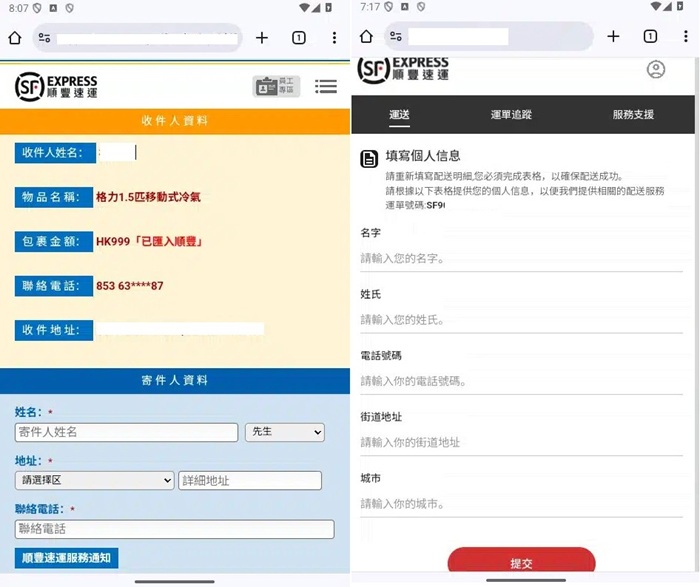
HKCERT has recently received multiple reports of scams impersonating delivery companies. Scammers send SMS messages, emails, or instant messages claiming that the recipient has a parcel awaiting collection. Some even warn that if users do not contact the company or visit a website promptly, they may be charged an “overdue storage fee” later. This tactic is designed to create a false sense of urgency and pressure victims into immediate action.
There are two main variants of this scam:
- Phishing Website Variant — The message contains a link to a fake courier website that mimics the official site to trick victims into entering personal details, credit card numbers, or payment account credentials, and may even prompt downloads of malicious software.
- Fake Customer Service Variant — The message provides a phone number posing as the support hotline. When victims call, scammers use social engineering to extract sensitive information such as ID numbers, bank account details, or one-time verification codes.
Once victims disclose their information, scammers can steal funds or misuse their identity for further criminal activities. If you receive such messages, verify directly through official customer service channels or the company’s official app, and avoid clicking suspicious links or calling unknown numbers.
Phishing Links Exploiting Browser and System Vulnerabilities: Infected Just by Entering the Website
Phishing risks are not limited to credential theft. Recently disclosed vulnerabilities, including CVE 2025 14174 affecting Google Chrome on macOS and CVE 2025 43529 impacting multiple Apple operating systems, show that attackers may compromise devices simply by luring victims to visit a malicious website. Such websites are often delivered through phishing emails, fake shopping advertisements, or fraudulent delivery notifications. During peak shopping seasons, users tend to click more promotional links and tracking messages, increasing the risk of exposure. If devices or browsers are not updated, these malicious sites may exploit system vulnerabilities without the user’s knowledge. HKCERT urges the public to stay vigilant when clicking links and ensure their devices and browsers are kept up to date.
HKCERT has issued security bulletins, and the risks were rated as “Extremely High Risk”:
- Google Chrome Browser (Mac)
- Upgrade to version 143.0.7499.110 or later
- https://www.hkcert.org/tc/security-bulletin/google-chrome-multiple-vulnerabilities_20251211
- Apple Products
- Upgrade to iPhone’s version iOS 18.7.3 or iOS 26.2, iPad’s version iPadOS 18.7.3 or iPadOS 26.2, Mac’s version macOS Tahoe 26.2, Apple Watch’s version watchOS 26.2, Apple Vision Pro’s version visionOS 26.2, Apple TV’s version tvOS 26.2 and Safari’s version 26.2.
- https://www.hkcert.org/tc/security-bulletin/apple-products-multiple-vulnerabilities_20251215
HKCERT Cybersecurity Best Practices
To ensure safe online shopping during the Christmas season, HKCERT recommends the following security best practices:
- Regularly install security updates and patches for operating systems, web browsers, and applications to reduce the risk of exploitation when visiting malicious websites or clicking phishing links.
- Use secure and trusted Wi-Fi connections, especially when making bookings or payments online. Avoid connecting to public Wi-Fi hotspots with low security settings, as they may be vulnerable to interception.
- Enable anti-phishing features in web browsers to help block phishing attacks.
- Access shopping platforms by entering the official URL directly or using saved bookmarks. Avoid clicking on links from unknown sources. Avoid clicking on links from unsolicited emails, messages, or social media posts, as they may lead to phishing sites.
- Carefully verify the legitimacy of websites before entering personal or payment information. Check for signs of phishing, such as unusual URLs, spelling errors, missing security certificates, or design inconsistencies.
- Do not disclose sensitive information, such as gift card numbers, credit card details, or personal information, to unverified websites or unknown parties.
- Do not handle account settings, service cancellations, or refund requests through external websites or messaging applications. Such actions should only be performed on the platform’s official website or mobile app.
- Be cautious of unsolicited phone calls claiming to be from online shopping platforms. Do not act immediately on such requests, even if the caller appears to know personal details. Always verify through official channels.
- Use “CyberDefender” to identify fraud and cyber traps by checking email addresses, URLs, and IP addresses, or call the Hong Kong Police Force Anti-Deception Coordination Centre “Anti-Scam Helpline 18222” for assistance.
- Regularly monitor online accounts and payment records for suspicious activities. Set up transaction alerts and review bank statements to detect unauthorised transactions promptly.
- In case you are suspected of falling victim to a phishing scam, immediately change your passwords, notify your bank or service provider, and report the incident to HKCERT for further assistance.
- Ends -
FOLLOW US
SUBSCRIBE TO OUR NEWSLETTERS
Share the latest information of HKPC to your inbox